Your vehicle's greatest enemy in the Middle East isn't the road; it's the atmosphere. Most owners assume a thicker film provides better security, but in a climate where surface temperatures regularly exceed 50°C, chemical resistance to oxidation is the only factor that truly prevents failure. You've likely seen luxury cars with peeling edges or a hazy, yellowed finish, proving that standard protection is no match for the Arabian sun. Finding the best ppf for uae weather requires looking beyond brand marketing to find materials that thrive under extreme UV radiation and constant sandblasting.
We recognize the anxiety of watching a significant investment lose its luster to the elements. You deserve a solution that offers genuine self-healing capabilities and high gloss retention without the risk of adhesive failure. This article identifies the specific Paint Protection Films that survive the UAE's harshest seasons while maintaining a factory-fresh appearance. We'll explore why high-quality Thermoplastic Polyurethane (TPU) has become the industry benchmark and compare how elite brands like XPEL and 3M back their products with 10-year warranties that actually hold up against the heat.
Key Takeaways
- Identify why high-performance TPU is the only viable barrier against a UV index of 11+ and why inferior TPH films degrade rapidly in the desert.
- Discover the best ppf for uae weather by comparing elite brands like XPEL and Stek based on their thermal stability and resistance to oxidation.
- Learn how to maintain the optical clarity of your factory paint, ensuring the film protects the surface without dimming the depth of the metallic finish.
- Evaluate the necessity of a medical-grade installation environment to prevent dust contamination and ensure a seamless, long-term bond.
- Determine whether pre-cut templates or custom bulk cuts offer the safest and most precise fit for your specific luxury vehicle model.
The UAE Environmental Challenge: Why Standard PPF Fails in the Desert
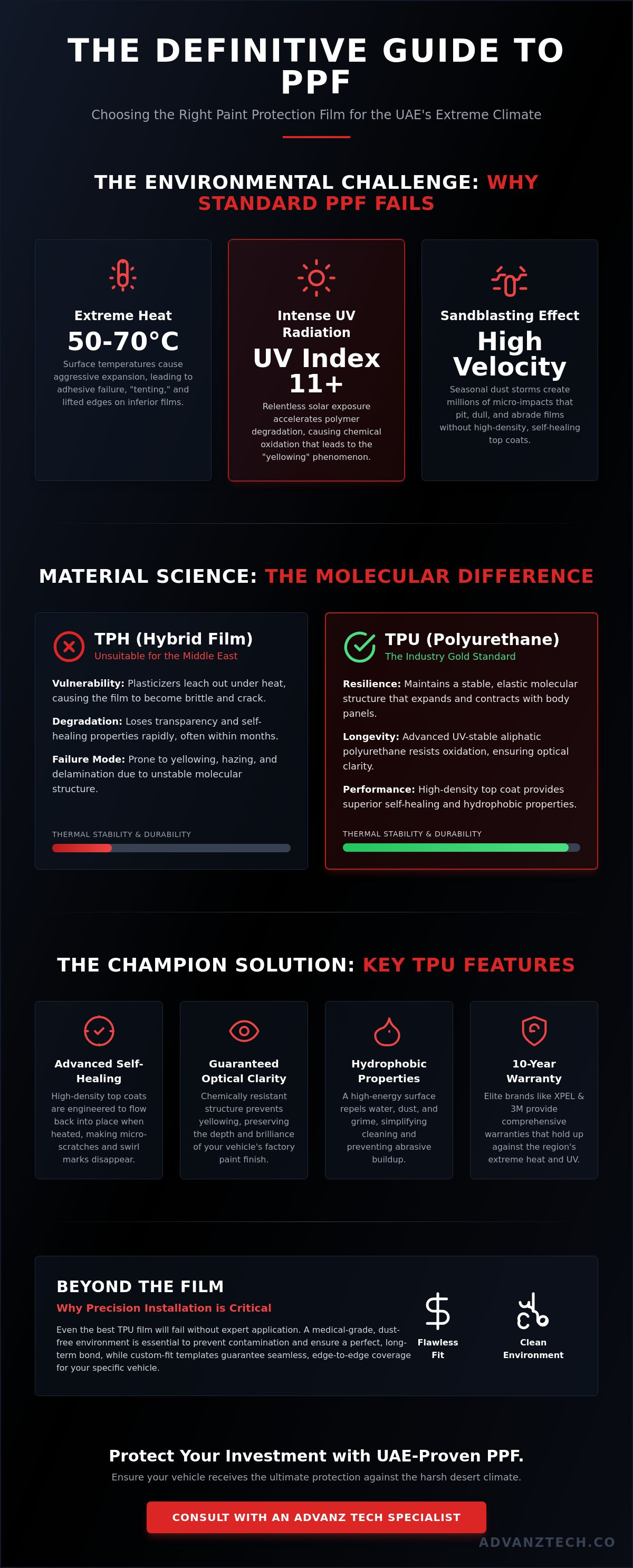
Standard films designed for temperate climates frequently fail within their first year in the Middle East. To survive here, a high-performance Paint Protection Film (PPF) must act as a specialized thermoplastic urethane (TPU) barrier engineered for extreme thermal stability. It isn't just about a physical layer; it's about the film's ability to maintain its molecular integrity when ambient temperatures hit 50°C and the UV index regularly climbs to 11 or higher. This intense radiation accelerates polymer degradation, causing inferior materials to become brittle and lose their protective qualities.
Thermal expansion presents another critical hurdle for luxury car owners. On dark-colored vehicles, surface temperatures can easily exceed 70°C during peak afternoon sun. This extreme heat causes standard films to expand and contract aggressively, which often leads to "tenting" or lifting at the edges. Without a high-tack, heat-resistant adhesive, the film will eventually separate from the paintwork. Furthermore, the constant barrage of high-velocity silica particles during seasonal dust storms creates a sandblasting effect that can pit and dull the finish of any car not equipped with the best ppf for uae weather.
UV Radiation and the 'Yellowing' Phenomenon
Yellowing occurs when low-grade adhesives and top coats undergo chemical oxidation. The heat traps energy within the film's layers, causing a breakdown that manifests as a murky, discolored tint. For owners in Dubai and Abu Dhabi, a non-yellowing guarantee is a non-negotiable priority to ensure the car's aesthetic value remains intact. UV-stable aliphatic polyurethane is the industry gold standard for 2026, providing a chemically resistant structure that stays optically clear despite relentless solar exposure.
Sand Abrasion: Beyond Simple Scratches
Desert winds transform fine sand into a constant abrasive force that targets the front bumper, hood, and side mirrors. This isn't just about avoiding stone chips; it's about resisting the micro-pitting caused by millions of tiny impacts. Effective Car PPF paint protection must utilize high-density top coats that incorporate advanced self-healing layers. These layers are designed to flow back into their original smooth state when exposed to heat, ensuring that even after a highway drive through a sand-heavy breeze, the finish remains swirl-free and glossy.
Evaluating Material Science: TPU vs. TPH and Thermal Stability
Selecting the best ppf for uae weather requires a shift in focus from mere thickness to molecular resilience. While many entry-level films utilize TPH (Thermoplastic Polyolefin Hybrid), this material is fundamentally unsuitable for the Middle East. TPH relies on plasticizers that leach out under extreme heat, causing the film to become brittle and lose its transparency within months. In contrast, high-grade TPU (Thermoplastic Polyurethane) maintains a stable molecular structure even when exposed to the 50°C ambient temperatures common in Al Quoz and across the Emirates.
Optical clarity remains a critical factor for luxury car owners who want to preserve the depth of their factory paintwork. A superior TPU film ensures that the metallic flake and pearl finishes of high-end vehicles aren't dimmed or distorted by the protective layer. Beyond aesthetics, the film's hydrophobic properties play a functional role in managing the 'Shamsham' cycles; those frustrating periods of light rain followed by heavy dust. A high-energy surface tension allows dust to be rinsed away easily, preventing the buildup of abrasive grime that can etch into the film's surface over time.
For those seeking a luxury vehicle repair specialist to ensure their paint is in pristine condition before application, understanding the balance between thickness and flexibility is essential. While a 10-mil film offers higher impact resistance, it often lacks the pliability required to wrap around the complex aerodynamic curves of modern supercars. A standard 8-mil TPU film typically provides the ideal equilibrium of protection and seamless fit.
Why TPU is Non-Negotiable for UAE Summers
TPU possesses a unique "memory" that allows it to expand and contract alongside the car's body panels as they heat up in the sun. This elasticity prevents 'edge lifting,' a common failure in cheaper films where the adhesive bond breaks due to the physical stress of thermal expansion. While a TPH film might survive two years in cooler climates, it rarely lasts a single summer in the desert. Investing in TPU secures a 10-year lifespan, providing a reliable bridge between current protection and future resale value.
The Role of the Top Coat in Heat Management
Modern top coats often incorporate ceramic-infused technology to help dissipate surface heat more efficiently. This layer acts as the primary defense against chemical staining and environmental fallout. Premium TPU films activate self-healing at 25°C, making Dubai the perfect environment for automatic repair. This means that minor swirl marks and surface abrasions disappear almost instantly under the natural ambient heat of a Dubai afternoon, keeping the exterior in a state of constant refinement without manual intervention.
Top PPF Brands for Dubai: Performance Under 50°C Heat
Selecting the right brand requires analyzing how a film's proprietary top coat reacts to the specific UV wavelengths found in the Emirates. XPEL Ultimate Plus remains a dominant force because its aliphatic polyurethane structure is specifically engineered to resist the yellowing chemistry triggered by extreme UV indices. It offers a level of optical clarity that is essential for preserving the factory finish on high-end vehicles. This film is widely considered a benchmark for the best ppf for uae weather due to its proven track record in the Gulf's most demanding conditions.
Stek DYNOshield takes a different approach by integrating "Super Hydrophobic" properties directly into the film's top layer. This is particularly effective in dusty environments where fine particulate matter otherwise sticks to the surface. SunTek Reaction provides a hybrid solution by fusing PPF with ceramic coating technology. This creates a surface that is exceptionally easy to clean during the humid summer months. While 3M VentureShield remains a legacy option, it often lacks the advanced self-healing velocity required to compete with modern TPU alternatives when surface temperatures exceed 50°C.
XPEL vs. Stek: The Battle for Dubai’s Supercars
High-end aesthetics often depend on how well a film masks or mirrors the 'orange peel' texture found on European paints. XPEL is frequently favored for its ability to provide a glass-like finish that complements professional BMW repair Dubai standards. Stek, however, is often cited for having a slightly higher gloss index that appeals to owners of exotic supercars. Warranty realities in the Middle East are also a factor; while many brands advertise "Lifetime" coverage, this is typically defined as a 10-year period in the UAE to account for the intense environmental stress.
Matte and Stealth Finishes in the Sun
Satin finishes have seen a surge in popularity among luxury SUV owners in Al Quoz. Matte PPF serves a dual purpose. It transforms the vehicle's appearance while protecting factory matte paint, which is notoriously difficult to repair if scratched or stained. These textured films require specific maintenance in sandy conditions to prevent dust from becoming trapped in the microscopic pores of the finish. If you're looking to preserve your car's aesthetic edge, investing in professional Car PPF pain protection is the most effective way to secure its long-term value.
Beyond the Brand: Why Precision Installation is the Ultimate Protection
The most resilient film on the market will still fail if the application environment is compromised. In Dubai, where microscopic silica particles are omnipresent, a "dust-free" workspace isn't a marketing claim; it's a technical necessity. Achieving a bubble-free finish requires a medical-grade clean room with high-efficiency particulate air filtration. Without this controlled atmosphere, contaminants become trapped between the adhesive and the clear coat, leading to silvering and premature lifting. This environmental control is what separates a temporary fix from the best ppf for uae weather.
Precision also depends on the cutting methodology. While pre-cut templates are safer for high-volume shops, custom bulk cuts allow for superior edge tucking. This technique ensures the film wraps around the panel edges, making the installation virtually invisible and significantly reducing the risk of peeling at high speeds. For vehicles undergoing extensive body repair, custom cuts provide the flexibility to protect unique panel alignments that templates might miss. Before any film touches the car, the paint must be flawless. Sealing in swirl marks or oxidation under a 10-year film only highlights the defects, making paint correction a non-negotiable prerequisite.
The Advanz Tech Standard: Precision and Craftsmanship
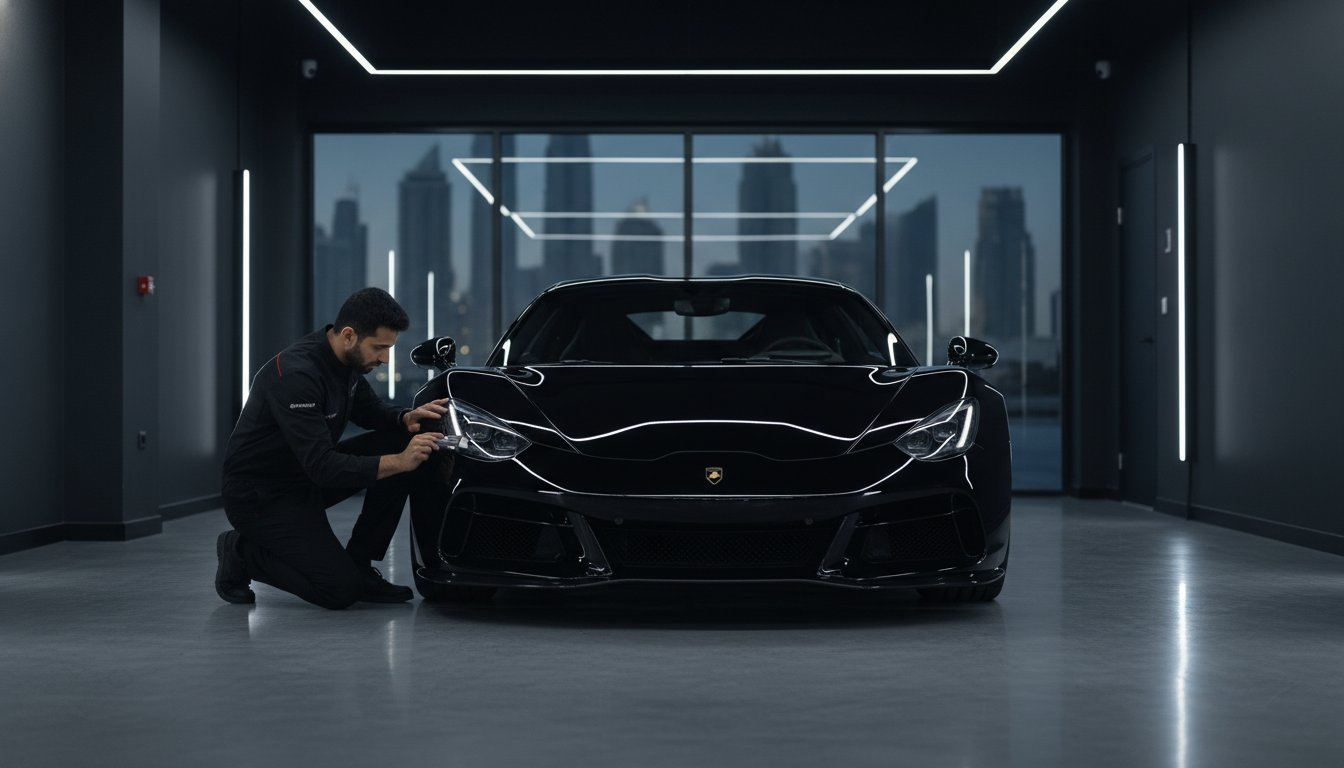
Our methodology mirrors the standards of a luxury vehicle repair specialist, where the focus is on systemic integrity rather than just surface aesthetics. We prioritize the careful disassembly of door handles, mirrors, and trim pieces. This allows us to achieve a seamless, edge-to-edge finish that prevents dirt buildup at the seams. Every project concludes with a 48-hour cure check, ensuring the adhesive has stabilized perfectly before the vehicle returns to the road.
Maintenance for Longevity in the UAE
Preserving your investment requires avoiding aggressive petroleum-based chemicals and high-pressure washes that can catch the film's edges. Use pH-neutral soaps and apply a dedicated PPF sealant every few months to bolster UV resistance. This proactive approach ensures even the best ppf for uae weather remains supple and clear throughout its lifespan. You can book your PPF consultation at our Al Quoz workshop to develop a bespoke protection plan tailored to your driving habits and vehicle's specific needs.
Securing Your Vehicle's Future in the Arabian Sun
Protecting a luxury vehicle in the Middle East requires more than just a surface-level solution. You've seen how advanced TPU materials and high-density top coats provide the essential defense against 50°C heat and relentless sand abrasion. Success ultimately depends on the intersection of high-end chemical engineering and surgical application precision. Selecting the best ppf for uae weather isn't just a purchase; it's a strategic investment in ensuring your car's exterior remains as resilient as its performance.
We believe in a partnership that prioritizes your vehicle's long-term value and aesthetic integrity. Our specialized Al Quoz clean-room facility is engineered to eliminate environmental risks, providing the sterile conditions necessary for a flawless finish. With certified installers for XPEL and premium TPU films, we bring elite craftsmanship to every BMW, Porsche, and Range Rover we service. Protect your investment with Dubai's leading PPF specialists at Advanz Tech. Your vehicle deserves a future defined by clarity and confidence.
Frequently Asked Questions
Does PPF really protect against sandstorms in Dubai?
Paint Protection Film acts as a sacrificial barrier against the high-velocity silica particles encountered during regional sandstorms. The film's energy-absorbing top coat prevents these particles from reaching the factory paintwork, effectively neutralizing the sandblasting effect. This physical shield is a critical component for anyone seeking the best ppf for uae weather to maintain a factory-fresh finish.
Will the film turn yellow after being parked in the sun every day?
Premium aliphatic TPU films are specifically engineered to resist yellowing despite daily exposure to intense UV radiation. Discoloration typically occurs in lower-grade TPH materials where the adhesive oxidizes under extreme heat. Leading brands provide decade-long warranties to reassure owners that their vehicle's optical clarity will remain intact through multiple summer cycles.
How long does a premium PPF last in the UAE climate?
You can expect a professional-grade installation to last between 5 and 10 years in the Middle East. While the ambient heat is intense, it actually aids the self-healing properties of modern films by keeping the top coat pliable and ready to repair micro-scratches. Regular maintenance with pH-neutral cleansers ensures the material doesn't become brittle over time.
Can I apply ceramic coating on top of my PPF?
Applying a ceramic coating over your film is a highly effective way to enhance its performance. This combination creates a "super-hydrophobic" surface that prevents dust and grime from bonding to the film's pores. It simplifies the cleaning process during humid months and adds an extra layer of chemical resistance against environmental fallout.
Is PPF better than ceramic coating for heat protection?
PPF is significantly more effective than ceramic coating for physical protection against heat-induced stress and impact. While ceramic coatings provide excellent chemical resistance and gloss, they lack the thickness required to absorb the energy of flying debris or sand. The 8-mil thickness of a premium TPU barrier offers a superior physical shield for maintaining exterior integrity.
Does removing old PPF damage the car's original paint?
Professional removal of high-quality film won't damage original factory paint when executed by a specialist using controlled heat or steam. The adhesive is designed to release cleanly from the clear coat without leaving a permanent residue. This ensures your vehicle's surface remains pristine, allowing for a seamless transition if you choose to upgrade to the latest best ppf for uae weather technology.