Does your supercar’s front fascia look more like a lunar landscape than a precision-engineered masterpiece after a single weekend drive through the UAE? At high speeds, even microscopic sand particles act as an abrasive force, while larger road debris causes permanent damage to your factory finish. You’ve likely felt that flash of anxiety when hearing a sharp impact against the hood, fearing the inevitable chip that diminishes both beauty and resale value. Securing high-end stone chip protection for supercars is no longer a luxury; it’s a strategic necessity for any serious collector operating in Dubai’s harsh environmental extremes.
We understand that you demand more than just a basic wrap. You require an invisible armor that maintains a flawless showroom shine without yellowing or peeling in 50°C heat. This guide explores the 2026 landscape of Paint Protection Film (PPF), including films that block 99% of harmful UV radiation and feature advanced self-healing properties. You’ll discover how the latest integrated technologies, like XPEL Ultimate Fusion, create a permanent bridge between raw performance and long-term preservation. We’ll outline how to safeguard your investment, ensuring your vehicle remains a pristine asset ready for its next collection rotation.
Key Takeaways
- Understand why low ground clearance makes high-performance vehicles uniquely vulnerable to road-level projectiles and high-velocity sandblasting.
- Explore how advanced stone chip protection for supercars utilizes multi-layer polyurethane and the Dubai sun's heat to self-heal minor abrasions.
- Learn to audit your vehicle's usage to determine whether full-body coverage or strategic impact-zone protection best suits your driving style.
- Discover why bespoke digital plotting is the only way to ensure your factory paint remains untouched by physical blades during the application process.
- Gain insight into the essential decontamination and preparation steps that guarantee your invisible armor remains clear and secure for years.
The Physics of Impact: Why Supercars Require Specialized Stone Chip Protection
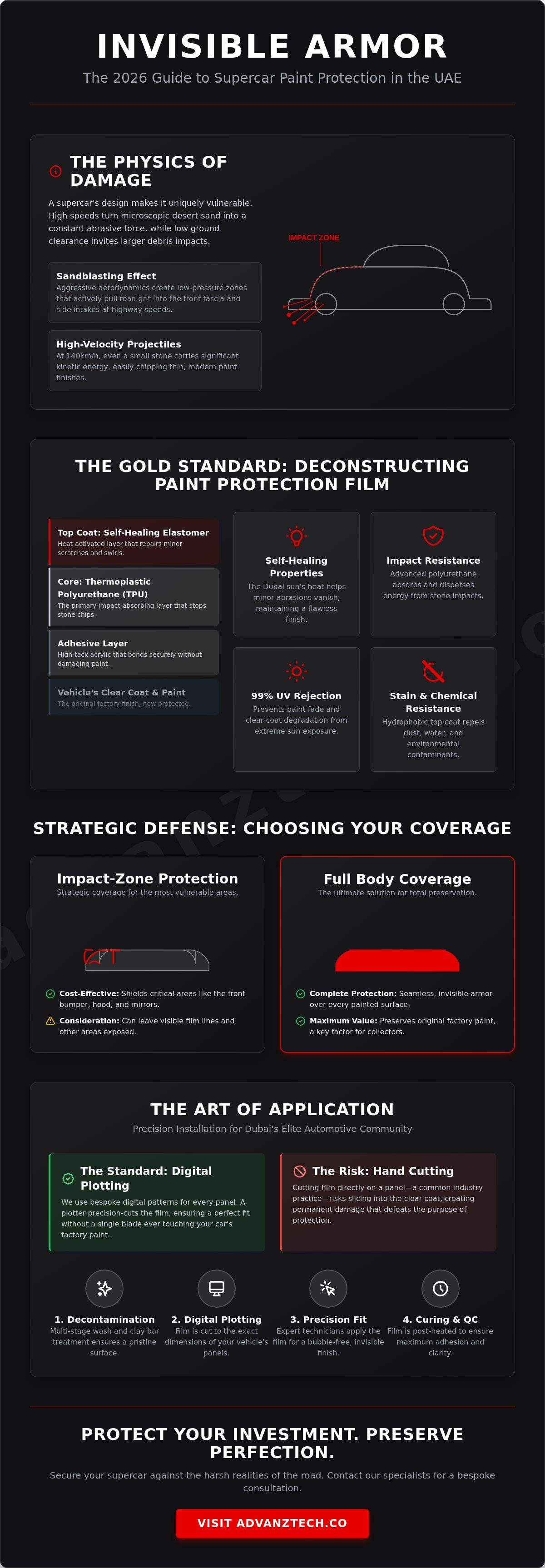
Effective stone chip protection for supercars begins with understanding that your vehicle is a high-speed target. Unlike a standard sedan, a supercar operates within a unique set of physical constraints that invite damage. A Paint protection film (PPF) acts as a high-impact polyurethane barrier, engineered specifically to absorb and disperse the energy of road-level projectiles before they reach the delicate clear coat. It's the only physical barrier capable of dissipating kinetic energy from stone impacts effectively.
To better understand the intensity of road impacts and the necessity of high-grade protection, watch this helpful video:
Dubai’s high-speed arterial roads present a specific challenge known as the sandblasting effect. At highway speeds, fine desert grit becomes a constant abrasive stream. Because supercars feature aggressive aerodynamics and low ground clearance, they create low-pressure zones that literally suck road grit into the front fascia and side intakes. This turns every highway cruise into a high-velocity erosion event. Without a specialized barrier, your paintwork faces a relentless barrage of microscopic and macroscopic projectiles.
The Vulnerability of Modern Supercar Paint
Modern factory finishes now rely on water-based paints to meet global environmental standards. While better for the planet, these coatings are significantly thinner and more brittle than the older solvent-based varieties. A single stone chip isn't just a cosmetic flaw; it’s a breach that can lead to oxidation. In the elite collector market, a re-spray can drastically diminish a vehicle's market value, as original paint is a non-negotiable metric for high-end collection rotation. The UAE’s extreme UV environment further complicates this, as exposed primer can degrade rapidly under intense sun.
High-Velocity Debris vs. Standard Protection
The physics of a city-speed scratch and a 140km/h stone impact are worlds apart. Standard films from a decade ago often lack the necessary thickness, measured in mils, to displace the sheer force of high-velocity debris. Professional stone chip protection for supercars in 2026 utilizes advanced polymer density to ensure that energy is moved laterally through the film rather than vertically into the panel. This technical sophistication is what separates a basic wrap from a true preservation strategy. You aren't just covering the car; you're installing a sacrificial layer designed to manage kinetic energy.
Paint Protection Film (PPF): The Gold Standard for High-Performance Preservation
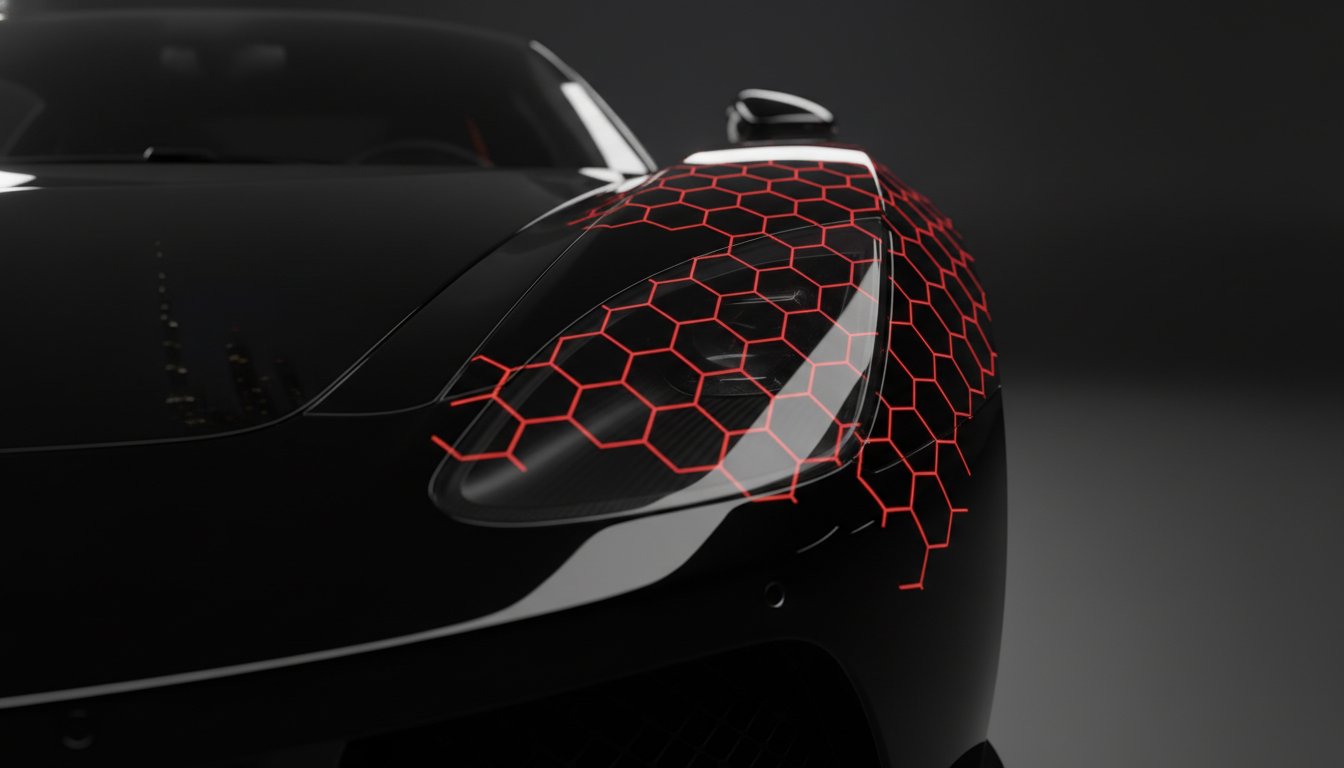
Premium PPF is an advanced composite material rather than a simple vinyl wrap. It features a sophisticated multi-layer architecture designed for maximum durability. At the base, a high-tack acrylic adhesive ensures the film remains perfectly bonded during high-speed maneuvers on the E11. The central layer consists of heavy-duty thermoplastic polyurethane (TPU), which provides the structural integrity needed for effective stone chip protection for supercars. Finally, a clear elastomeric top coat provides the high-gloss finish and self-healing properties that define modern preservation standards. This stack of high-tech polymers creates a resilient shield that's both flexible and incredibly tough.
Optical clarity remains a non-negotiable requirement for high-end automotive finishes. Modern films are engineered to be 100% invisible, preserving the depth of metallic flakes or the specific texture of matte factory paints without any "orange peel" effect. These films also incorporate advanced hydrophobic properties, causing desert dust and rain spots to slide off the surface effortlessly. This makes maintenance significantly easier in Al Quoz, where environmental contaminants and fine sand are a daily challenge for every collector. Your car stays cleaner for longer, and the paint retains its deep, saturated look as if it just rolled off the assembly line.
PPF vs. Ceramic Coating: Choosing Your Defense
While ceramic coatings offer exceptional chemical resistance and gloss, they can't stop a rock at 120 km/h. PPF is the only solution for physical impact resistance. For those seeking the ultimate defense, we recommend layering a ceramic coating over your car PPF paint protection. This hybrid approach combines the impact absorption of TPU with the extreme slickness of ceramic, ensuring your investment remains pristine. If you're ready to design a custom protection plan, you can consult with our specialists to explore the best options for your specific model.
Self-Healing Technology in the UAE Climate
Dubai's climate offers a unique advantage for PPF maintenance. The 40°C+ ambient temperatures act as a continuous catalyst for the film's self-healing layer. This technology relies on the molecular memory of the top coat; when heat is applied, the polymers return to their original, flat state, effectively erasing swirl marks and light abrasions. It's a proactive repair system that works while your car is parked in the sun. To keep this layer active, regular cleaning with pH-neutral soaps is essential to prevent surface contamination from clogging the pores of the film.
Selecting Your Shield: Comprehensive vs. Impact-Zone Protection Strategies
Selecting the right level of stone chip protection for supercars isn't a one-size-fits-all decision. It requires a strategic audit of your vehicle’s operational profile. First, evaluate how you use the car. A weekend cruiser primarily driven on well-maintained city roads has different needs than a track-focused machine that faces high-velocity rubber "marbles" and gravel. Second, identify your high-impact zones. While the hood and front bumper are obvious targets, rocker panels and side mirrors often sustain the most frequent damage from tires flinging debris upward.
Bodywork complexity also dictates your strategy. Modern supercars feature active spoilers, deep aerodynamic vents, and intricate carbon fiber splitters. These components demand a high level of technical precision to ensure the film edges are tucked perfectly without compromising the vehicle's airflow or aesthetic lines. Finally, always verify the warranty and aftercare support provided by your luxury vehicle repair specialist. A premium installation is an investment in your car's future value, and the quality of the bond is just as important as the film itself.
The "Track Pack" vs. Full Body Wrap
The "Track Pack" is the minimum standard for the Dubai supercar community. It focuses on the front clip, including the full hood, fenders, bumper, and mirrors. However, a full body wrap offers a significant aesthetic advantage by eliminating visible film edges across the entire vehicle. This is particularly crucial for protecting exposed carbon fiber weave, which requires specialized film adhesion to prevent lifting at the edges of the textured surface. A full wrap ensures that every square centimeter of your investment remains factory-fresh.
Matte and Satin Transformations
You can use PPF to achieve a bespoke aesthetic upgrade without the risks of a permanent respray. Products like XPEL Stealth transform a factory gloss finish into a sophisticated matte or satin look while providing robust stone chip protection for supercars. Maintaining factory matte paint is notoriously difficult since you can't polish out scratches; however, protected matte film allows you to enjoy the look with the added benefit of self-healing technology. If you're ready to define your car's defensive strategy, you can view our specialized protection packages today to find the perfect fit for your collection.
The Advanz Tech Standard: Precision Installation for Dubai’s Elite Automotive Community
The foundation of elite stone chip protection for supercars isn't the film itself; it's the preparation. We begin every project with a multi-stage decontamination wash to remove industrial fallout and microscopic grit. If your finish has existing imperfections, our team integrates professional body repair and paint correction to ensure the substrate is flawless before the first layer of polymer is applied. Applying film over a defect only preserves the mistake. We treat the vehicle surface as a clean slate, ensuring the bond is permanent and the finish is optically perfect.
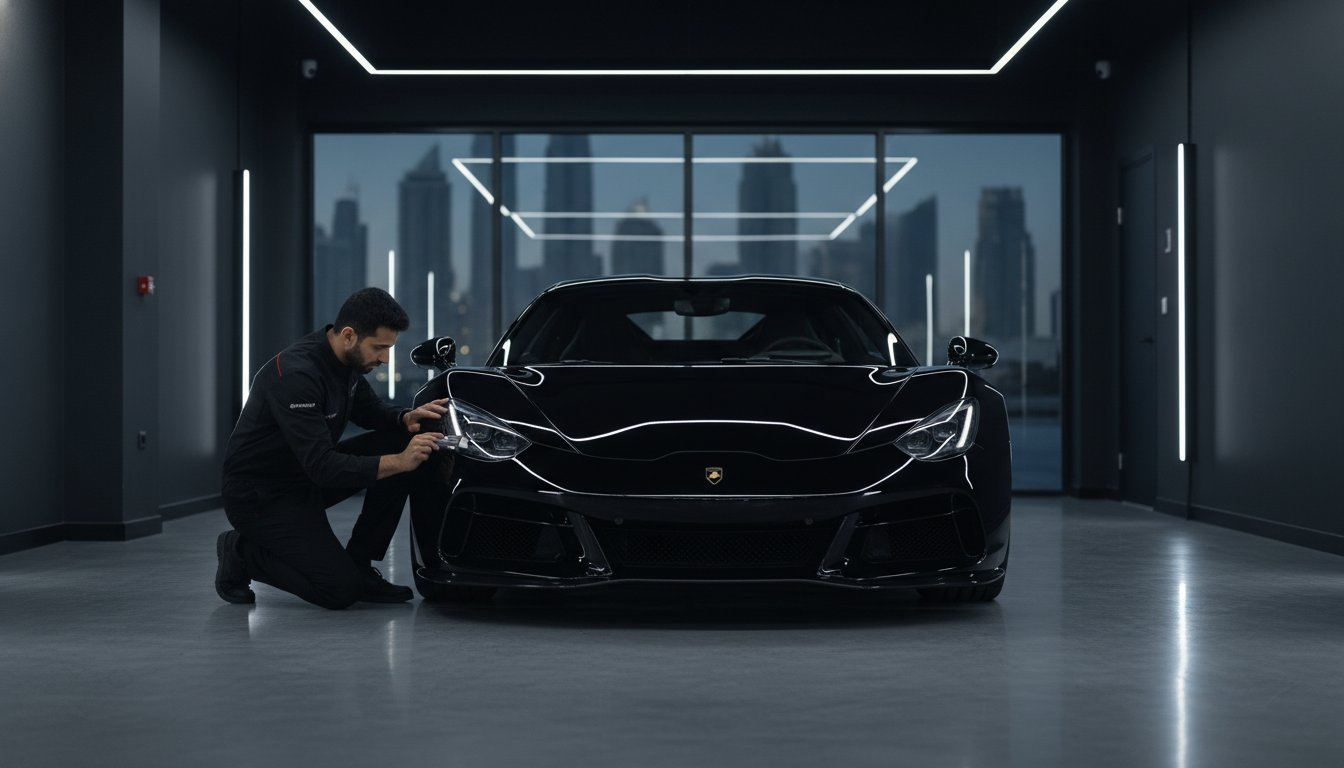
Installation precision is where we distinguish ourselves from high-volume shops. While many providers rely on bulk cutting, where blades are used directly on the car’s surface, we utilize bespoke digital plotting. This technology allows us to pre-cut templates specific to your vehicle’s VIN, ensuring zero blade contact with your factory paint. Our technicians specialize in edge wrapping, a technique that tucks the film behind panels for a truly invisible finish on the aggressive contours of Ferrari and Lamborghini models. After application, every vehicle undergoes a rigorous curing process in our climate-controlled Al Quoz facility to guarantee the adhesive stabilizes correctly in the UAE's unique atmospheric conditions.
Craftsmanship Over Commodity
Modern aero-kits with active cooling ducts and complex splitters require hand-finished precision that automated systems simply can't achieve alone. We extend this level of detail to the cabin, shielding carbon fiber door sills and high-traffic center consoles from scuffs. By integrating exterior protection with luxury automotive upholstery work, we offer a comprehensive cabin-to-exterior refresh that preserves the tactile and visual integrity of your investment. This holistic approach ensures your supercar remains a masterwork of engineering, both inside and out.
Long-Term Maintenance in Dubai
Preserving the longevity of stone chip protection for supercars requires specific maintenance protocols tailored to the desert. Avoid high-pressure washes that can lift tucked edges, and address bird droppings or industrial fallout immediately to prevent etching into the self-healing layer. Regular inspections at our facility ensure the film remains in peak condition despite the heat. If you're ready to secure your vehicle’s future, schedule a consultation at our Al Quoz facility for a bespoke protection plan designed for your specific driving profile.
Future-Proof Your High-Performance Investment
Preserving a supercar in Dubai’s demanding environment requires a fusion of advanced polymer science and meticulous craftsmanship. The right stone chip protection for supercars does more than just stop debris; it maintains the factory finish, enables self-healing of minor abrasions, and protects your vehicle's long-term resale value. Whether you choose a strategic Track Pack or a comprehensive full-body wrap, the precision of the installation determines the success of the defense. Digital plotting and edge-wrapping techniques ensure that your invisible armor remains truly undetectable while shielding every complex aerodynamic curve.
Our specialized Al Quoz facility is purpose-built to handle the complexities of high-end exotics. With extensive expertise in BMW repair Dubai and other premium marques, we operate as authorized installers of world-leading protective films. we don't just apply film; we engineer a long-term preservation strategy for your most valued assets. Secure your supercar’s future with a bespoke PPF consultation at Advanz Tech. Your vehicle deserves a standard of care that matches its engineering excellence.
Frequently Asked Questions
Is PPF really necessary for supercars in Dubai?
High-velocity sand and road debris make stone chip protection for supercars a necessity rather than an option in the UAE. The unique desert climate subjects low-slung vehicles to a constant abrasive force that can degrade factory paint in a single season. Beyond aesthetics, it's a strategic financial decision to preserve the vehicle’s original finish and maintain its market value for future collection rotation.
Will stone chip protection film yellow or peel in the UAE heat?
Premium films engineered for the 2026 market are specifically stabilized against intense UV radiation to prevent yellowing or adhesive failure. While older or lower-grade materials might struggle with 50°C summer peaks, our professional-grade solutions maintain their optical clarity and structural bond. We ensure the film remains invisible and secure through precision edge-wrapping and climate-controlled curing at our Al Quoz facility.
Can PPF be removed later without damaging the original factory paint?
Professional-grade film can be removed safely without leaving residue or lifting the clear coat, provided the factory paint was in good condition during installation. The high-tack acrylic adhesives used in modern stone chip protection for supercars are designed to be semi-permanent but fully reversible. This allows you to return the car to its original state or replace the film if it has sacrificed itself to stop a major impact.
How long does a professional PPF installation take for a supercar?
A comprehensive installation typically requires three to seven business days depending on the complexity of the vehicle’s aerodynamics and the level of coverage selected. This timeframe accounts for a multi-stage decontamination wash, precision digital plotting, and a mandatory curing period. Rushing the process can lead to edge lifting or trapped moisture, so we prioritize the integrity of the bond to ensure long-term durability.
What is the difference between "self-healing" film and standard vinyl wraps?
Standard vinyl wraps are thin, PVC-based films designed primarily for color changes with minimal impact resistance. In contrast, self-healing PPF is a thick, multi-layered polyurethane barrier with an elastomeric top coat that uses heat to repair swirl marks. This molecular memory allows the film to return to its original flat state when exposed to the Dubai sun, whereas vinyl remains permanently scarred by the same debris.
How do I maintain my PPF to ensure it lasts for its full warranty period?
Proper maintenance involves regular washing with pH-neutral soaps and avoiding high-pressure water streams directly on the film edges. You must address environmental contaminants like bird droppings or industrial fallout immediately to prevent them from etching the top coat. Using specialized sealants designed for polyurethane will help maintain the hydrophobic properties and ensure the film reaches its full five to ten-year life expectancy.