The unsightly tea-colored tint creeping across your white paintwork isn't an inevitable tax paid to the Arabian sun; it's the result of a chemical mismatch. To effectively prevent ppf yellowing in middle east climate conditions, you must look beyond the surface and understand the molecular architecture of your vehicle's armor. We recognize the frustration of watching a significant investment in car PPF paint protection succumb to the heat, leaving your luxury vehicle looking aged and dull.
You deserve a protective solution that matches the engineering excellence of your car. This guide reveals the chemical secrets of premium Aliphatic TPU and the specific maintenance protocols required to keep your exterior crystal clear in the extreme UAE heat. We will explore how to maximize your ROI through advanced material science and provide a precise maintenance schedule tailored for the unique environmental demands of Dubai. From ceramic-infused technologies to professional-grade upkeep, you're about to discover how to maintain a flawless finish regardless of the thermometer's peak.
Key Takeaways
- Understand the chemical distinction between Aromatic and Aliphatic TPU to ensure your film resists oxidation under the intense desert sun.
- Master the specific maintenance protocols required to prevent ppf yellowing in middle east climate conditions by countering the "Heat Cycle" effect and extreme UV exposure.
- Implement a professional bi-weekly washing schedule using pH-neutral shampoos to protect the film from mineral deposits and recycled water damage.
- Evaluate how climate-controlled installation environments and precise template choices dictate the long-term clarity and edge-to-edge durability of your vehicle.
- Optimize your investment by leveraging advanced ceramic-infused technologies that provide superior infrared heat rejection and hydrophobic properties.
Understanding the Chemistry: Why Some PPF Turns Yellow in Dubai
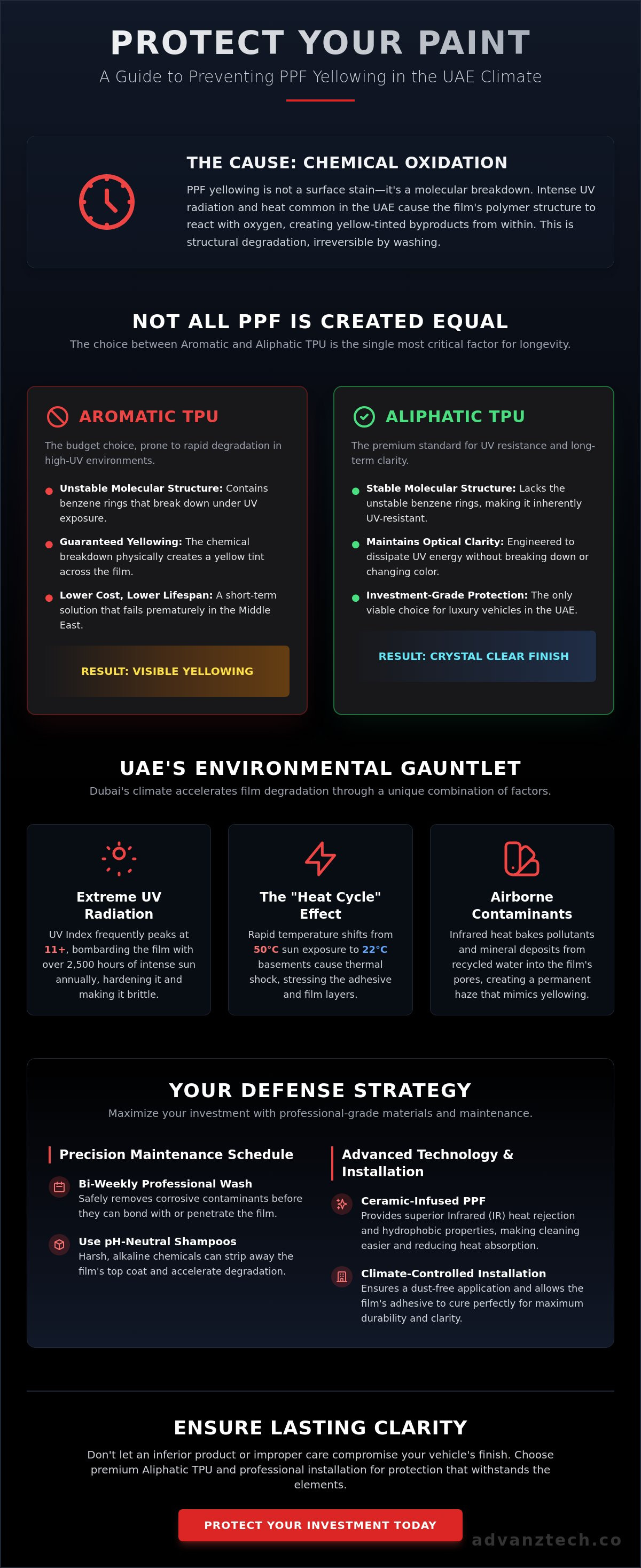
Yellowing isn't a surface stain you can simply wash away. It's a fundamental breakdown of the thermoplastic urethane film itself. This process, known as chemical oxidation, occurs when the polymer's molecular structure reacts with oxygen and high-intensity ultraviolet radiation. To effectively prevent ppf yellowing in middle east climate conditions, you must understand that the battle is fought at the atomic level rather than on the surface of the car.
The relentless solar energy in the UAE accelerates these chemical reactions. While a film might look clear in a showroom, the structural integrity determines how it will look after twelve months of exposure to the Gulf sun. Understanding the specific material science behind your protection is the first step toward long-term clarity.
To visualize the science behind these material failures, watch this technical breakdown:
Aromatic vs Aliphatic Polyurethane
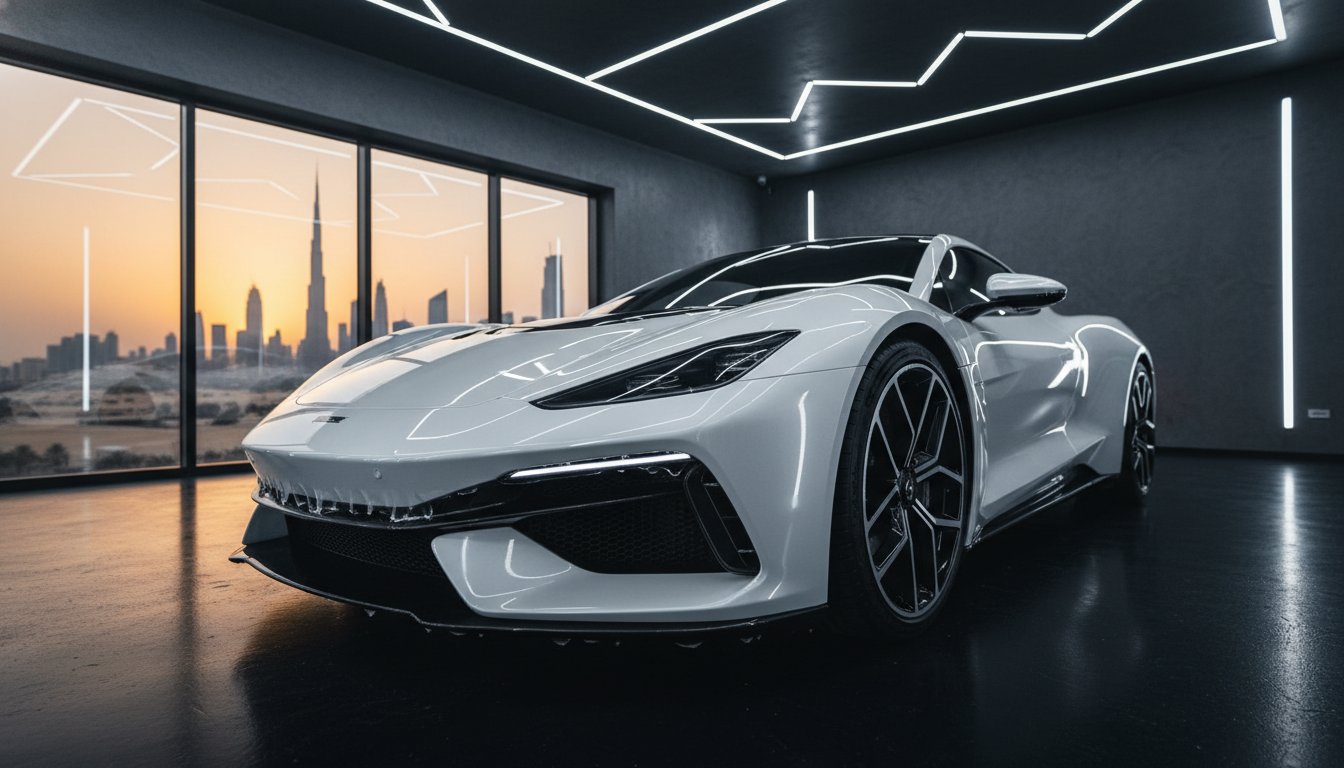
The core of the problem lies in the specific type of Thermoplastic Polyurethane (TPU) used during manufacturing. Budget-oriented films often utilize Aromatic TPU because it's significantly cheaper to produce. These films contain chemical structures called benzene rings that are inherently unstable when exposed to light. Under the relentless Dubai sun, these rings absorb UV energy and physically break apart, leading to that dreaded tea-colored tint. Aliphatic TPU is the industry standard for UV resistance in 2026. This premium material lacks the unstable benzene rings, making it far more resilient against high UV indices. Before committing to your next car ppf paint protection installation, verify that the film is 100% Aliphatic to ensure your investment lasts.
The Oxidation Process Explained
UV radiation acts like a microscopic hammer, constantly striking the chemical bonds within the film. When these bonds snap, they create yellow-tinted byproducts that remain trapped within the polymer matrix. This is structural degradation, not surface contamination. Many owners mistakenly believe the film is just "dirty," but no amount of scrubbing can fix a broken molecular bond. This effect is most punishing on white, silver, and light-colored luxury vehicles where the contrast makes even slight oxidation immediately apparent. High-quality Aliphatic films are engineered to stay clear by dissipating this energy without breaking their chemical backbone.
Middle East Environmental Factors Accelerating Film Degradation
The UAE environment isn't just hot; it's a high-energy laboratory that tests the limits of automotive polymers daily. With a UV Index frequently peaking at 11 or higher, the sheer volume of solar radiation is staggering. To effectively prevent ppf yellowing in middle east climate conditions, owners must account for more than just temperature. The chemical bonds in your film face a relentless bombardment of photons, which triggers the chemistry of polyurethane photodegradation at an accelerated pace compared to European or North American climates.
The Impact of Extreme UV Radiation
Dubai receives over 2,500 hours of intense sunshine annually. This constant exposure hardens the film, reducing its elasticity and making it brittle. While manufacturers claim UV stability, these benchmarks often fail to simulate the synergy between heat and airborne pollutants found in industrial hubs like Al Quoz. Infrared (IR) heat penetrates the film layers, baking contaminants into the pores of the material. This creates a permanent haze that mimics yellowing but is actually a deep-seated structural compromise.
The "Heat Cycle" Effect
A critical, yet overlooked factor is the "Heat Cycle" stress. Your vehicle's exterior might reach 50°C while parked in the sun, only to be plunged into a 22°C climate-controlled basement moments later. This rapid thermal contraction and expansion puts immense pressure on the adhesive-to-paintwork bond. In coastal areas like Dubai Marina, high humidity levels can infiltrate the edges of the film during these cycles, leading to delamination and trapped moisture. This cycle weakens the film's infrastructure, making it more susceptible to environmental staining.
Sand Abrasion and Top-Coat Failure
Fine desert sand acts as a microscopic abrasive. As wind-blown particles strike the surface, they create micro-scratches that eventually exceed the film's self-healing capacity. These valleys in the top coat trap salinity and pollutants, dulling the finish and creating a yellowed appearance. If a film is left to degrade under these conditions, the adhesive can bond too aggressively to the clear coat. Removing such a compromised film often requires professional body repair to restore the underlying paintwork. Ensuring your vehicle receives expert care from a luxury vehicle repair specialist can mitigate these environmental risks before they become permanent.
5 Proactive Steps to Maintain Film Clarity in the UAE
Clarity is a commitment, not a one-time purchase. To effectively prevent ppf yellowing in middle east climate conditions, you must adopt a maintenance protocol that counters the region's unique chemical and physical stressors. While Aliphatic TPU provides the foundation, your daily habits determine whether that film remains invisible or becomes a liability. Research from the National Institute of Standards and Technology highlights how environmental factors in polymer degradation, specifically the synergy of high heat and humidity, can accelerate the breakdown of protective coatings if they aren't properly managed.
Establishing a strict bi-weekly washing schedule using pH-neutral shampoos is your first line of defense. You must avoid "cheap" automatic car washes at all costs. These facilities often use recycled water with high mineral concentrations and aggressive brushes that can compromise the film's self-healing top coat. Immediate decontamination is equally vital. Bird droppings and tree sap become highly acidic when baked under the 45°C Dubai sun, leading to permanent etching of the TPU within hours. Always carry a quick detailer and a soft microfiber to address these spots instantly.
The Correct Washing Technique for Dubai
The "two-bucket method" isn't a luxury; it's a necessity in a sandy environment. One bucket holds your soapy water, while the second is for rinsing your mitt. This prevents abrasive desert sand from being dragged across the film, which creates micro-swirls that trap dust and mimic the appearance of yellowing. Avoid using high-pressure washers within twelve inches of the film's edges to prevent lifting. Finally, use a high-quality drying towel to eliminate "hard" UAE water spots, as mineral deposits can eventually calcify and dull the finish.
Advanced Top-Coat Protection
Applying a ceramic top-coat specifically formulated for PPF creates a sacrificial barrier that enhances UV shielding. This hydrophobic layer prevents contaminants from bonding with the TPU pores, keeping the surface slick and easy to clean. We recommend refreshing these hydrophobic properties every six months to maintain peak performance. For a truly comprehensive restoration of your vehicle's prestige, consider pairing your exterior care with luxury automotive upholstery work to ensure the cabin reflects the same level of excellence as the paintwork. If you want to ensure your vehicle receives world-class protection, consult with a luxury vehicle repair specialist to design a custom maintenance plan.
Selecting the Right Protection: Why Installation Quality Matters
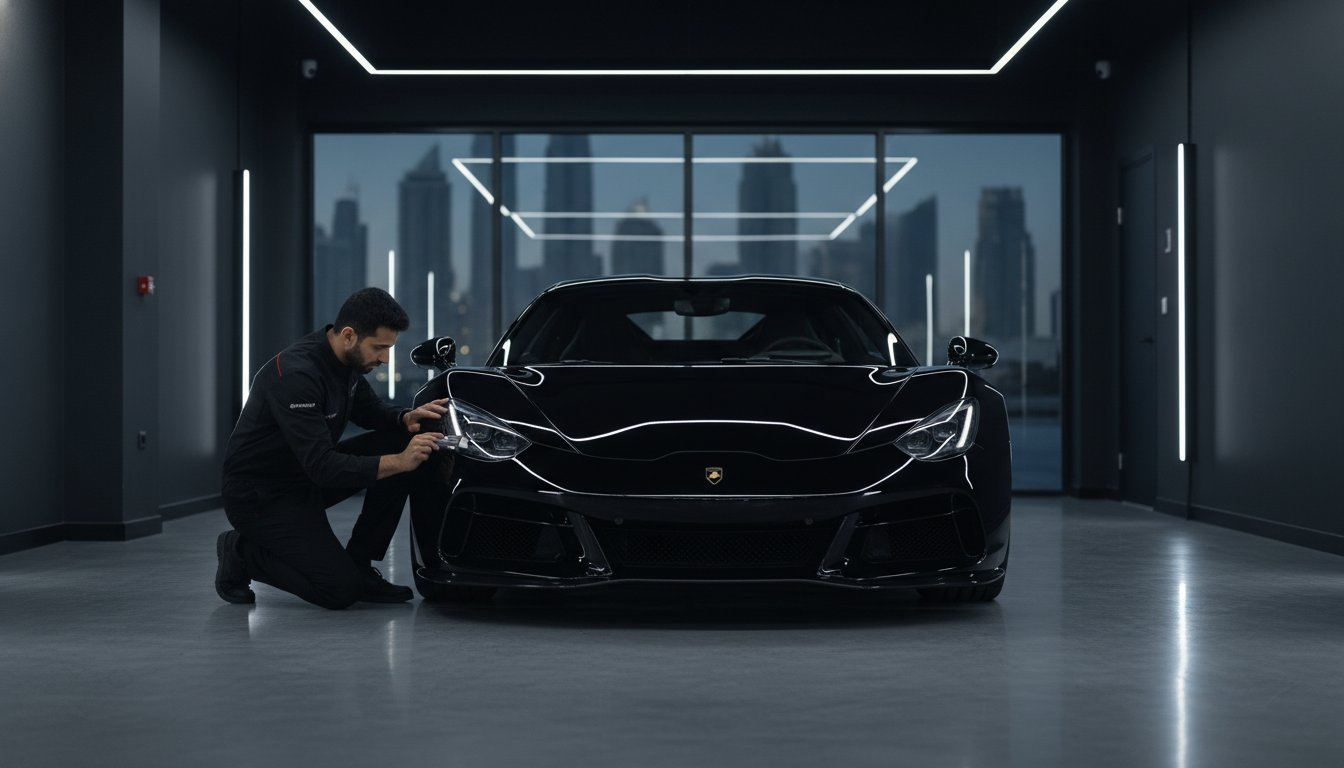
The final layer of defense is the environment where the protection is born. Even the highest grade Aliphatic TPU can fail if the application is flawed. To prevent ppf yellowing in middle east climate conditions, the installation must occur in a sterile, climate-controlled theater. Microscopic dust particles trapped under the film during application act as catalysts for oxidation. These contaminants create tiny air pockets that expand during the intense heat cycles discussed earlier, leading to "edge yellowing" that undermines your vehicle's aesthetic. Every luxury vehicle repair specialist project we undertake includes a rigorous post-installation inspection to ensure the bond is absolute and the edges are perfectly sealed.
Workshop Standards in Al Quoz
The environment during application determines the film's total lifespan. Our facility in Al Quoz maintains strict temperature and humidity controls to ensure the adhesive cures at an optimal rate. This precision is vital for the curing process; we advise that you don't wash your car for seven days post-installation to allow the bond to stabilize against the UAE's external pressures. We specialize in handling complex curves on high-performance brands like BMW and Range Rover. While many use pre-cut templates that leave exposed gaps, we often prefer custom bulk-cut applications. This allows us to wrap the edges deep into the panels, significantly reducing the risk of lifting or debris accumulation that triggers discoloration.
Warranty and Long-Term Partnership
A comprehensive 5 to 10 year warranty is your primary safeguard, but you must understand the fine print. A legitimate "Yellowing Warranty" covers the chemical failure of the film's polymer structure, not damage caused by neglected maintenance or abrasive automatic washes. We position ourselves as a trusted advisor for your vehicle's ongoing aesthetic health, providing a clear roadmap for maintenance that evolves with the seasons. Choosing a local specialist who understands the specific UV and thermal stresses of the region ensures your warranty is more than just a piece of paper; it's a commitment to long-term clarity. Precision in the bay leads to perfection on the road. Consult with Advanz Tech for your next PPF application to secure the future of your vehicle's exterior.
Securing the Future of Your Vehicle’s Aesthetic
Maintaining a showroom finish in the UAE requires a strategic shift from reactive care to proactive preservation. By prioritizing Aliphatic TPU and adhering to a rigorous maintenance schedule, you can effectively prevent ppf yellowing in middle east climate conditions. The combination of advanced material science and disciplined washing protocols ensures that your vehicle’s exterior remains a testament to its engineering excellence, rather than a victim of environmental oxidation. Precision at the point of installation is the final variable in this equation of clarity.
Our specialized Al Quoz workshop features climate-controlled bays designed for surgical precision during application. We combine deep expertise in luxury brands like BMW and Range Rover with comprehensive warranties against yellowing and peeling to provide absolute peace of mind. Your vehicle deserves a partner that understands the intersection of craftsmanship and local environmental demands. Protect your investment with premium PPF at Advanz Tech and ensure your car’s visual legacy remains untarnished for years to come. The road ahead looks clearer when your protection is engineered to last.
Frequently Asked Questions
Is it true that all PPF will eventually turn yellow in Dubai?
No, yellowing is not an inevitable outcome for all films. While budget-grade Aromatic films will certainly oxidize under the intense UAE sun, premium Aliphatic TPU is engineered specifically to resist this chemical breakdown. If you invest in high-quality materials and follow a disciplined maintenance routine, your film can remain crystal clear for its entire operational life.
How long does a high-quality Aliphatic TPU film last in the UAE?
A premium Aliphatic TPU film typically lasts between 5 and 10 years in the Middle East, provided it's installed correctly and maintained well. This lifespan is significantly longer than budget alternatives because the material's molecular structure is inherently stable against UV radiation. Factors like parking in shaded areas and regular decontamination will help you reach the upper end of this range.
Can I use a ceramic coating over my PPF to stop it from yellowing?
Applying a ceramic coating over your protection is a highly effective strategy to prevent ppf yellowing in middle east climate conditions. The coating serves as a sacrificial barrier that adds an extra layer of UV protection and seals the pores of the film. This prevents pollutants, salt, and industrial fallout from penetrating the TPU and triggering the oxidation process that leads to discoloration.
What should I do if my white car’s PPF is already showing a yellow tint?
You should consult a luxury vehicle repair specialist immediately for a professional assessment. If the tint is caused by structural oxidation within the film, the only solution is professional removal and replacement. It's critical to address this early, as leaving degraded film on your vehicle can lead to adhesive failure that might eventually require specialized body repair to restore the paintwork.
Does the brand of PPF matter more than the installer?
The brand provides the chemical foundation, but the installer determines the final outcome and long-term durability. Even the best film from a global brand will fail if it's applied in a dusty environment or if the edges aren't properly sealed. A professional installation in a climate-controlled bay ensures the adhesive bonds perfectly, which is just as important as the quality of the TPU itself.
How often should I have my PPF professionally inspected in Dubai?
We recommend a professional inspection every six months to monitor the health of your film. These check-ups allow a specialist to identify early signs of edge lifting or contaminant buildup that could compromise the protection. Regular inspections also ensure that your hydrophobic top-coat is functioning correctly and that your long-term warranty remains valid under local environmental stresses.